Drinking Water
In this section
-
Your Water Charges
Description of the introduction of water metering and water charges. As well as how to monitor your water usage.
-
Water Quality
Information about our water quality and our means of compliance and advice on protecting our water supply
- Water Demand
-
Save Water
Information about typical water usage for activities, and how you can manage your water use.
- Water Chlorination
-
Water Connections
How do I connect to the water supply?
-
Private Water Supplies
Information for home owners on private water supplies
- Restricted water supply
- Urgent Water Notices
- Subscribe to receive our water alerts

As of 1 July 2025, the delivery of drinking water and wastewater services in Selwyn is now the responsibility of Selwyn Water Limited - a newly established council-controlled organisation (CCO). This marks a transition to a future-focused, service-led approach to managing our essential water services. While Selwyn Water Limited builds its own dedicated website, all the information, forms, and support you need will remain available right here on the Selwyn District Council website.
Nothing else changes for now. We will keep you updated as the transition progresses, and when the new website goes live in 2026.
In the meantime, you can visit the Selwyn Water page here for more information.
If you have any questions, please contact us in the usual way, our teams are here to help.
We currently deliver potable water to more than 19,000 households. Most of our customers receive water on demand while a minority are on a restricted supply in our rural areas. As a supplier of drinking water, we monitor the quality and the quantity of our water supplies on a daily basis and encourage all consumers to be responsible consumers and save water.
Request a service
| APPLY / REQUEST | FIND INFORMATION | PAY | REPORT |
|---|---|---|---|
|
|
Find the location and details of our Water utilities (pipes and connections) using the Canterbury Maps Viewer website. 
Our water supplies
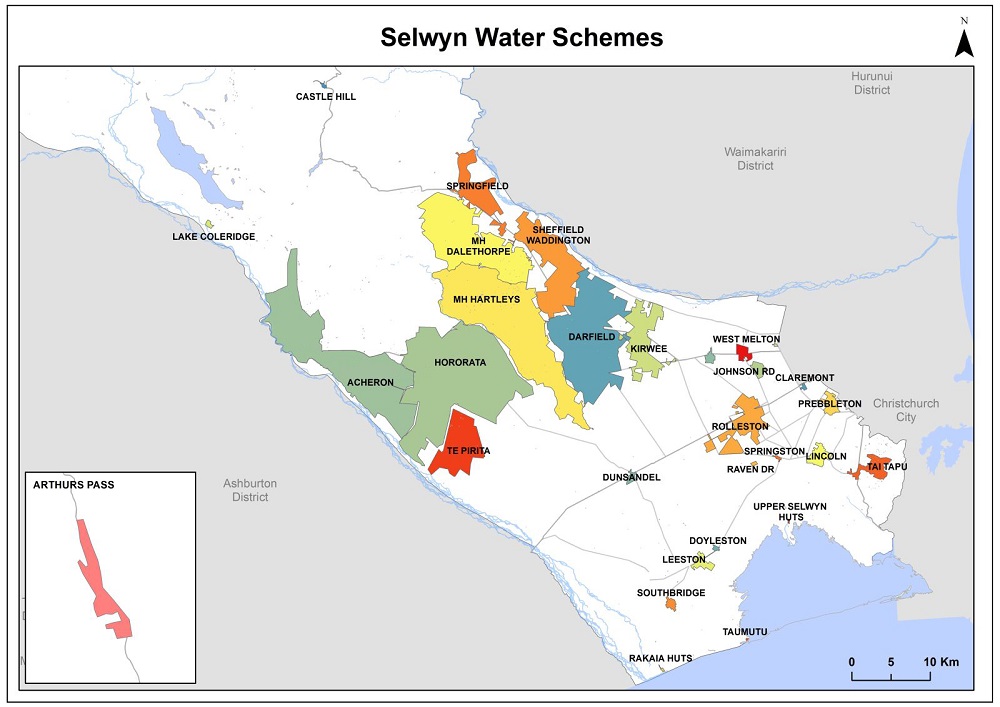
We manage over 30 water supplies across the District that spans from Arthur's Pass to Taumutu in the southern region. Selwyn water supplies generally draw water from the following two sources:
- Ground water (aquifers):
- Deep secure ground water. These sources are protected from the influence of surface water contamination and are usually deemed to better source of raw water supply.
- Shallow or insecure ground water. Shallow bores and wells are generally at a higher risk of contamination and may require a higher level of treatment.
- Surface water (general)
- Sourced from rivers, streams, creeks, water races and irrigation races. These open catchment sources are at higher risk of contamination and need higher levels of treatment before distribution.
You can see which Water Scheme you belong to by looking into your Rates Information