Selwyn students reap benefits of passionate Māori language advocate
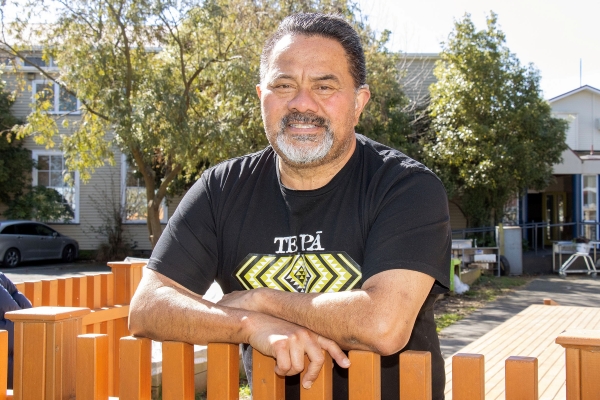
This week is Māori Language Week, so a good time to have a chat with long-time local te reo Māori advocate Miru McLean.
Miru McLean has been part of the Selwyn community for so long that many think he has always been a local.
McLean grew up in Whakatane, the cultural heart of Ngati Tūhoe, but ended up in Burnham 25 years ago on a Navy assignment and simply never left.
“Everybody thinks I’m a Cantabrian, but I’ll always be a Bay of Plenty boy,” smiles one of Selwyn’s prominent Māori cultural experts and language advocates.
McLean is Deputy Principal at Te Pā o Rākaihautū a kura ā iwi school in Linwood and also heavily involved in teaching about Māori culture and language in the Selwyn district.
“I really like it down here in Selwyn. I enjoy the community and I actually prefer the cold weather over the heat, because if you are cold, you can grab a blanket, but if it’s hot, you are hot all day and all night.”
McLean and his wife Neria Wildermoth bought their house in Rolleston in 2004, after he accepted a job in the Military Services Corrective Establishment, and he recalls how there were only a few houses around the New World shopping area.
“The rest around here were still paddocks, so the place has changed a lot since then. I like the community down here and there has always been a lot to do for our two daughters, a lot more than when I grew up in Whakatane.”
Even before his move to Selwyn, McLean had created warm memories in Canterbury after his all-conquering secondary schools' team from Māori boarding school Te Aute from Napier claimed the national rugby championship.
“We came down to Christchurch in 1984 and beat all the big schools. They didn’t know what hit them,” smiles the former halfback.
“We then went to the UK and France and gave all those top schools a hiding as well. I think we played six games on that tour and won them all.”
McLean is proud of his association with Te Aute, which did not only produce great rugby players, but also great Māori Leaders like Sir Apirana Turupa Ngata, from Ngāti Porou, who was the first Māori student at the University of Canterbury in 1893, Sir Maui Pomare, from Ngāti Mutunga, Ngāti Toa was one of the first Māori in Parliament in 1911 and Minister of Health in 1923 and Te Moana-Nui-a-Kiwa Ngarimu, from Ngati Porou enlisted in the Army in 1940 with the 28th NZ Battalion and was the first Māori to be awarded the Victoria Cross (VC) for bravery, determination and outstanding Leadership.
With his passion and lifetime immersion in Māori culture and language, McLean soon took on roles as cultural advisor and marae manager when he was in the Navy.
“I spent about 10-15 years travelling the world, which was the best thing about the Navy. Along with free dental, medical and accommodation,” laughs McLean, whose most memorable assignment is the recovery of the body of an Unknown Soldier (Te Toa Matangaro) from Belgium.
McLean was part of the NZDF team in 2004 to bring back the Unknown Soldier to New Zealand to lie in state in Wellington on the 11th hour of the 11th day of the 11th month 2004 to coincide with Armistice Day.
“It was a big honour for me to be part of that.”
The McLean whānau by then had settled in Selwyn, where he became the cultural advisor of the Limited Service Volunteers, which was later renamed as Burnham Youth Development Unit.
“It’s a six-week course where young people from 17-25 years old learn to build confidence. As cultural advisor I teach them the cultural awareness programme, haka and Haka pōwhiri that I wrote when they first come in,” says McLean who was also asked to write the haka for St Thomas College.,
Despite a long military career, McLean says he has always been a teacher of sorts and made an easy transition into the education sector once he left the Navy in 2011.
In 2012 he enrolled in Teacher Training College at University of Canterbury and started teaching at Ellesmere College for six years.
In 2018, McLean completed his Master in Māori indigenous study and has now been teaching at Te Pā o Rākaihutū for seven years, where he teaches te reo Māori, te ao Haka, tikanga me ōna kawa and is the Poutoko (Deputy Principal) for the school.
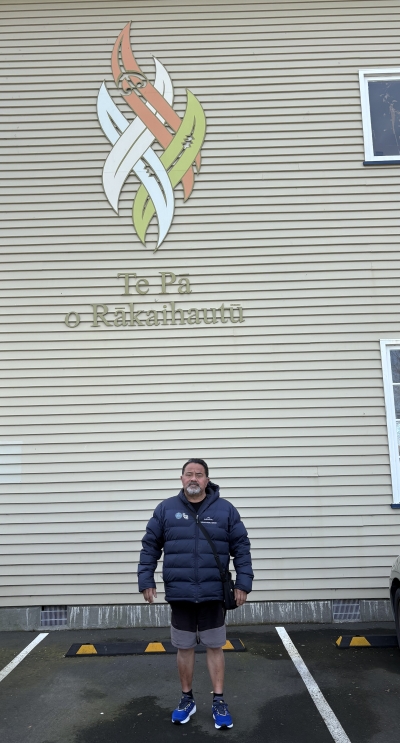
In his spare time, he also teaches te reo Māori courses each Thursday night at Te Ara Ātea, as well as trying to stay fit.
“I used to play a lot of sport and do coaching but have given that up. I am now trying to work smarter, not harder,” smiles the fit-looking 59-year-old.
McLean says he has seen major changes in the way te reo Māori is accepted, spoken and used in modern New Zealand compared to his childhood days in the Bay of Plenty.
“It is evolving, but in a way, it is still the same. But there are a lot more people learning the language and the Māori culture now, all thanks to the advocates like Sir Timoti Kāretu, Pou Temara and the late Te Wharehuia Milroy, and many more other great advocates of the revitalisation of te reo Māori,” says McLean.
He says the establishment of Kohanga Reo, Kura Kaupapa, Wharekura and kura ā Iwi in the education system have played a pivotal role in the growth of te reo Māori.
“Now you can see those kids come through who are fluent in te reo Māori and te reo Pakeha and can be articulate in both worlds.
“Our classes on Thursday are always full, which shows that more people want to learn the language.”
Last modified: 25 Sep 2025 9:38pm